

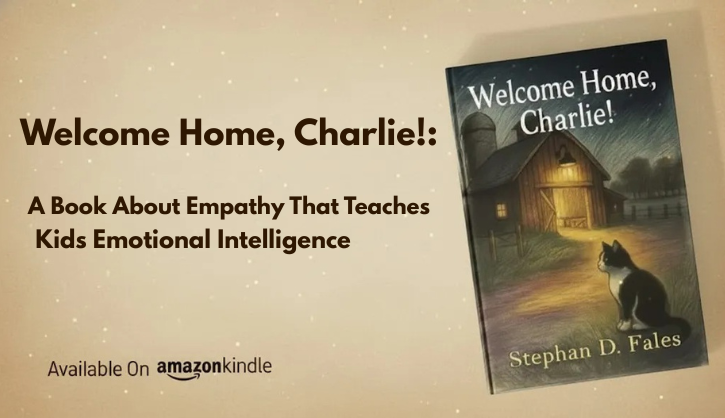
Explaining empathy to children can be surprisingly tricky. Parents and educators often know how important it is, yet struggle to put it into words that young readers can truly understand. Saying “be kind” or “think about how others feel” doesn’t always connect in meaningful ways. Children need stories that allow them to experience empathy rather than hear about it.
That’s where Welcome Home, Charlie! Shines. This heartfelt novel introduces empathy through Charlie’s journey, allowing young readers to step into his emotional world and recognize feelings as they unfold. As a book about empathy, it gently explores fear, safety, connection, and belonging without preaching or simplifying emotions.
Through carefully written scenes and thoughtful character development, the story uses emotional cues to foster natural emotional awareness. At the same time, it functions as a children’s story book about friendship, showing how relationships grow when understanding and patience are present. More than an emotional story, Welcome Home, Charlie! Gives children language for feelings and space to reflect on them.
Why Empathy Matters in Early Childhood
Empathy is one of the most important skills children develop during their early years. It influences how they communicate, form friendships, resolve conflicts, and respond to others’ feelings. When children understand empathy, they become more capable of cooperation, kindness, and emotional regulation.
Early childhood is a critical window for developing emotional intelligence. Children are naturally observant, but they need guidance in recognizing emotions; both their own and others’. This is where books for young readers play a vital role. Stories create a safe emotional distance, allowing children to explore feelings without pressure or personal vulnerability.
A thoughtfully written emotional story helps children learn that emotions are normal, complex, and shared by everyone. By connecting with characters, children practice empathy naturally. They begin to understand that feelings influence behavior and that everyone experiences moments of fear, hope, confusion, and joy. This foundation supports stronger relationships and emotional resilience as children grow.
What Makes Welcome Home, Charlie! Effective
One of the book’s greatest strengths is its emotional authenticity. Charlie’s backstory introduces readers to vulnerability and resilience in a way that feels accessible and genuine. His experiences reflect feelings children recognize: uncertainty, longing, and the desire to feel safe.
The story’s structure mirrors many classic animal friendship stories, using a symbolic character perspective to help children engage emotionally without feeling overwhelmed. Charlene’s compassion plays a key role in modeling empathy through action rather than explanation. Her care demonstrates what understanding looks like in real situations.
The barn setting adds familiarity and warmth, creating a shared space where relationships develop naturally. Each chapter highlights different emotions children commonly face: fear of the unknown, comfort in connection, disappointment when expectations change, and gratitude for support. These layers make the book especially effective as both a teaching tool and an engaging story.
How Charlie’s Story Teaches Emotional Intelligence
Charlie’s journey offers multiple opportunities to explore emotional intelligence in practical ways. Instead of delivering lessons directly, the story invites readers to notice their feelings, reflect on their reactions, and understand their choices.
The following sections break down specific emotional skills presented in the book and show how parents and educators can discuss them meaningfully with children.
Recognizing and Naming Emotions
Throughout the story, Charlie experiences a wide emotional range of fear during uncertainty, sadness during separation, hope when connection grows, and joy when he feels understood. These moments provide natural opportunities to talk about feelings.
Parents and teachers can pause while reading and ask questions such as, “How do you think Charlie feels right now?” or “What would you feel in that situation?” These conversations help children connect the emotions in stories to their own experiences.
For example, when Charlie feels unsure about where he belongs, children may relate it to starting a new school or joining a new group. Naming emotions helps children feel validated and teaches them that emotions are something to understand, not avoid.
Understanding Others’ Perspectives
Charlie’s interactions with Charlene and the barn community introduce children to the idea that people experience situations differently. Each character brings their own perspective, shaped by emotions and experiences.
This section of the story is ideal for teaching perspective-taking. Adults can ask questions like, “Why do you think Charlene feels upset?” or “Why does Charlie feel drawn in a different direction?” These discussions show children that understanding others requires listening and curiosity.
Learning that everyone has their own story helps children develop patience and empathy. It also teaches them that disagreement does not mean someone is wrong; it often means emotions are involved.
Building Compassion Through Action
Charlene’s actions throughout the story model compassion clearly and consistently. She notices Charlie’s needs, responds thoughtfully, and offers care without expecting anything in return. These behaviors show children how empathy becomes action.
This is where animal friendship stories are especially compelling. They demonstrate care through behavior rather than dialogue, making lessons easier to absorb. Children can relate these moments to everyday situations like helping a friend, including someone new, or comforting someone who feels sad.
Compassion becomes something children can do, not just understand.
Practical Ways to Use This Book
Welcome Home, Charlie! Works beautifully in both home and classroom environments. During read-aloud sessions, adults can pause briefly for reflection rather than give lengthy explanations. Short, consistent conversations are often more effective than lengthy discussions.
Children can keep empathy journals where they draw or write about how characters felt in each chapter. Role-playing scenes from the book allows kids to practice emotional responses in a safe space.
Creative projects, such as drawing what “home” means or writing alternate endings, help children connect emotionally to the story. The key is consistency. Regular, small interactions with the book strengthen emotional understanding more than one-time lessons.
Additional Benefits Beyond Empathy
While empathy is the central theme, the book also teaches courage, resilience, and belonging. Friendship stories throughout the narrative show how cooperation and understanding build stronger communities.
Like the best books for young readers, Welcome Home, Charlie! Teaches by showing rather than lecturing. Children absorb lessons naturally through story and character, making them more likely to apply what they learn in real life.
Where to Experience Charlie’s Journey
Welcome Home, Charlie! is available in accessible formats for families and educators. This children’s story book about friendship is an ideal companion for shared reading, classroom discussions, and social-emotional learning activities.
- About Page: Learn more about Stephan D. Fales
- Shop Page: Purchase Welcome Home, Charlie!
- Amazon Page: Find the book here
Exploring the story together creates meaningful moments of connection.
Final Thoughts
Finding the right book about empathy can transform how children understand emotions. Welcome Home, Charlie! Offers an emotional story that blends heart and insight, helping young readers develop emotional intelligence through experience rather than instruction.
Each reading plants small seeds of kindness, understanding, and compassion. Over time, those seeds grow into stronger relationships and deeper self-awareness. Charlie’s journey reminds us that empathy is learned gently; one story, one feeling, and one conversation at a time.
FAQs
Q1: What age group is Welcome Home, Charlie! Best for?
This book is perfect for children ages 6–10. Younger children enjoy it as a read-aloud, while older readers explore deeper emotional themes independently.
Q2: How does this book teach empathy to children?
Instead of lecturing, the story allows children to feel Charlie’s emotions, fostering natural, meaningful empathy development.
Q3: Can teachers use this book in classrooms?
Yes. Many educators use it for social-emotional learning, character discussions, and teaching emotional intelligence.
Q4: What other lessons does this book teach besides empathy?
Children also learn about courage, resilience, trust, friendship, and belonging.
Q5: How long does it take to read the book with children?
It can be read in one sitting (30–40 minutes) or chapter by chapter over several days.
Q6: Is Welcome Home, Charlie! Suitable for homeschooling?
Absolutely. It pairs well with SEL activities, creative writing, and character education lessons.

