

There is a moment every parent knows. Your child comes home from school quieter than usual, unsure how to name what they are feeling. They don’t want a lecture. They want a story.
The right book can do what a conversation sometimes cannot. It slips past the defenses, meets a child where they are, and shows them something true about the world without making them feel like they are being taught.
Cat books for kids do this especially well. Cats are mysterious, expressive, and deeply relatable to children. Stories centered around them have a quiet power to open hearts and model the kind of emotional intelligence we hope to see our children develop.
Why Animal Stories Are So Powerful for Emotional Growth in Kids
Children often find it easier to connect with emotions through animals than through human characters. There is less pressure. Less self-consciousness. A child who might resist identifying with a struggling human character will lean in completely when a small, lost cat is the one facing the unknown.
Animal stories create a safe emotional distance. Kids can explore fear, loneliness, courage, and belonging through a creature that doesn’t judge them. That is exactly where emotional learning takes root.
This is why animal books that teach life lessons for kids have stood the test of time. They aren’t just entertainment. They are gentle mirrors that help children see themselves more clearly.
What Makes a Great Cat Book for Kids
Not every book with a cat on the cover will move a child. The ones that truly matter share a few things in common.
They tell the truth about difficult feelings without sugarcoating them. They show characters who struggle and make mistakes and still find their way. And they wrap all of that inside a story warm enough that a child never feels overwhelmed.
Great cat stories for children also move at a child’s pace. Short scenes. Clear emotions. Enough space between moments for a young reader to sit with what they just felt before turning the page.
Most importantly, the best stories don’t hand children the moral. They let children arrive at it themselves, which is the only way a lesson truly sticks.
How Cat Books for Kids Teach Empathy Naturally
Empathy isn’t something you can explain into a child. It has to be felt first. That is where storytelling earns its place.
When a child reads about a cat who is lost, scared, and searching for somewhere to belong, something shifts. They imagine being that cat. They feel the cold, the uncertainty, the small flicker of hope when a kind stranger appears. That imaginative act is empathy in its earliest form.
Kids empathy books that use animal characters are particularly effective because children don’t edit their emotional responses to animals the way they sometimes do with people. The compassion flows freely. And that practice of feeling freely, of letting another’s experience matter to you, is exactly what we want children to carry into their human relationships.
Over time, a child builds an emotional vocabulary through these stories. They recognize loneliness, unexpected kindness, and quiet courage in real life because they have already lived them on the page.
The Role of Friendship Themes in Children’s Story Books About Friendship
Friendship is one of the central anxieties of childhood. Will I be liked? What if I don’t fit in? What does it mean to be a real friend?
Children’s books that explore these questions through animal friendships give kids a framework for navigating their own social world. When a child watches a cat cautiously extend trust toward a new companion, they are learning something about vulnerability. When that trust is honored, they learn something about loyalty.
The best children’s story books about friendship don’t present friendship as effortless. They show the awkward beginning, the misunderstanding in the middle, and the quiet moment of repair. That is the version of friendship that is real, and kids recognize it immediately. These stories also teach children that friendship crosses boundaries. Different sizes, different species, different backgrounds. The connection is what matters, not the category.
A Story That Gets It Right: Welcome Home, Charlie!
Some books arrive at exactly the right moment and say exactly the right thing.
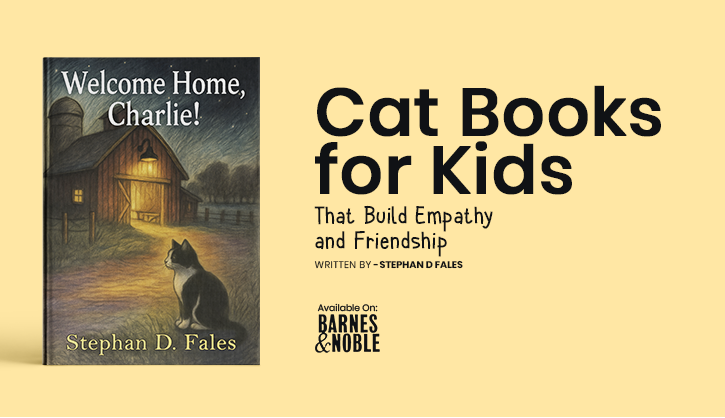
Welcome Home, Charlie! by Stephan D. Fales is that kind of book. It follows a young cat navigating a world that feels too big, too uncertain, and too unfamiliar. Along the way, Charlie encounters fear, unexpected kindness, and the slow realization that belonging is something you build rather than something you stumble into.
What makes this Charlie the cat story resonate with young readers is its honesty. Charlie isn’t always brave. The journey isn’t always clear. But the emotional thread running through every chapter, that pull toward connection and home, is something every child understands in their bones.
Parents and teachers have praised it for sparking real conversations about courage and empathy. That is a rare thing for a children’s book to accomplish.
Conclusion
The books we give children are not just stories. They are practice runs for life. Every lost cat found, every unexpected friendship formed, every act of quiet courage on the page becomes a small blueprint for how a child might respond when the real moment arrives.
Cat books for kids that center on empathy and friendship aren’t a niche genre. They are some of the most important things a child can read.
If you are looking for a place to start, Welcome Home, Charlie! by Stephan D. Fales is a gentle, emotionally rich story worth reading together. Some books you finish. Some books stay with you. This one stays.
Frequently Asked Questions
Q.1 What age group are cat books for kids most suited to?
Most cat books for kids work well for children between the ages of 5 and 12, depending on the complexity of the story. Picture books with simple cat characters suit younger readers, while middle-grade cat stories with deeper emotional themes are ideal for ages 8 and up. The key is matching the emotional content to where your child is developmentally.
Q.2 How do cat books for kids help with emotional development?
Cat books for kids often place animal characters in emotionally relatable situations, such as feeling lost, making new friends, or learning to trust. Children naturally connect with these experiences and begin to develop their own emotional vocabulary through the story. Over time, this kind of reading supports empathy, self-awareness, and emotional resilience.
Q.3 Are children’s books about cats effective for teaching friendship skills?
Yes, children’s books about cats are particularly good at modeling friendship because they show relationships forming gradually and imperfectly. Kids see the effort, the uncertainty, and the reward of genuine connection played out through animal characters. That emotional roadmap helps them navigate their own friendships with more confidence.
Q.4 Can a children’s book really improve empathy in kids?
Research consistently shows that reading fiction improves a child’s ability to understand the emotions of others. When children engage with a character’s inner experience, even a fictional cat’s, they are exercising the same mental and emotional muscles they use in real relationships. Regular reading of emotionally rich stories builds empathy over time.
Q.5 What should I look for in a good animal book for kids?
Look for an animal book for kids that shows real emotional complexity rather than simple happy endings. A good story will let the character struggle, make mistakes, and grow. The best books also leave room for a child to form their own conclusions rather than spelling out the lesson directly. That space is where genuine learning happens.